 USD $
USD $
These statements have not been evaluated by the Food and Drug Administration. This product is not intended to diagnose, treat, cure or prevent any disease.
Our story & the science
Why we made it. And how.
Bearly started with one problem: a protein number people couldn't hit — not for lack of willpower, but because shakes, bars and powders ask too much. Here's why we made it, and every number behind it.
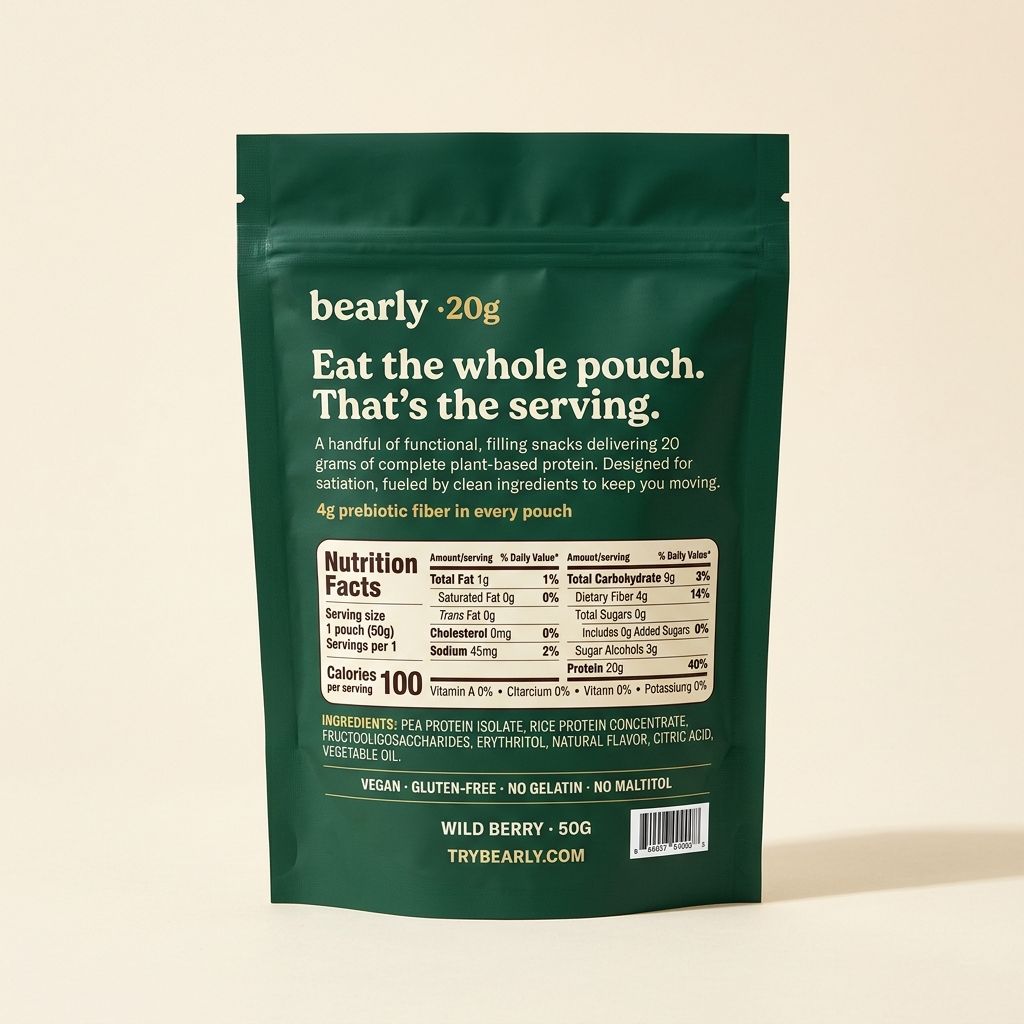
80/100Calories that are the protein: 20g × 4 kcal = 80 of the 100
9/9Essential amino acids covered by the pea + rice blend
4gPrebiotic fiber per pouch, on the panel
0gSugar. Sweetened with erythritol, no maltitol or sorbitol
Why Bearly exists
The protein you can keep eating.
Most people trying to eat more protein aren't short on motivation. They're short on room. An appetite that can't face 400ml of shake. A calendar with no time for a blender. A stomach that has already said no to whey, to sugar alcohols, to one more 250-calorie bar.
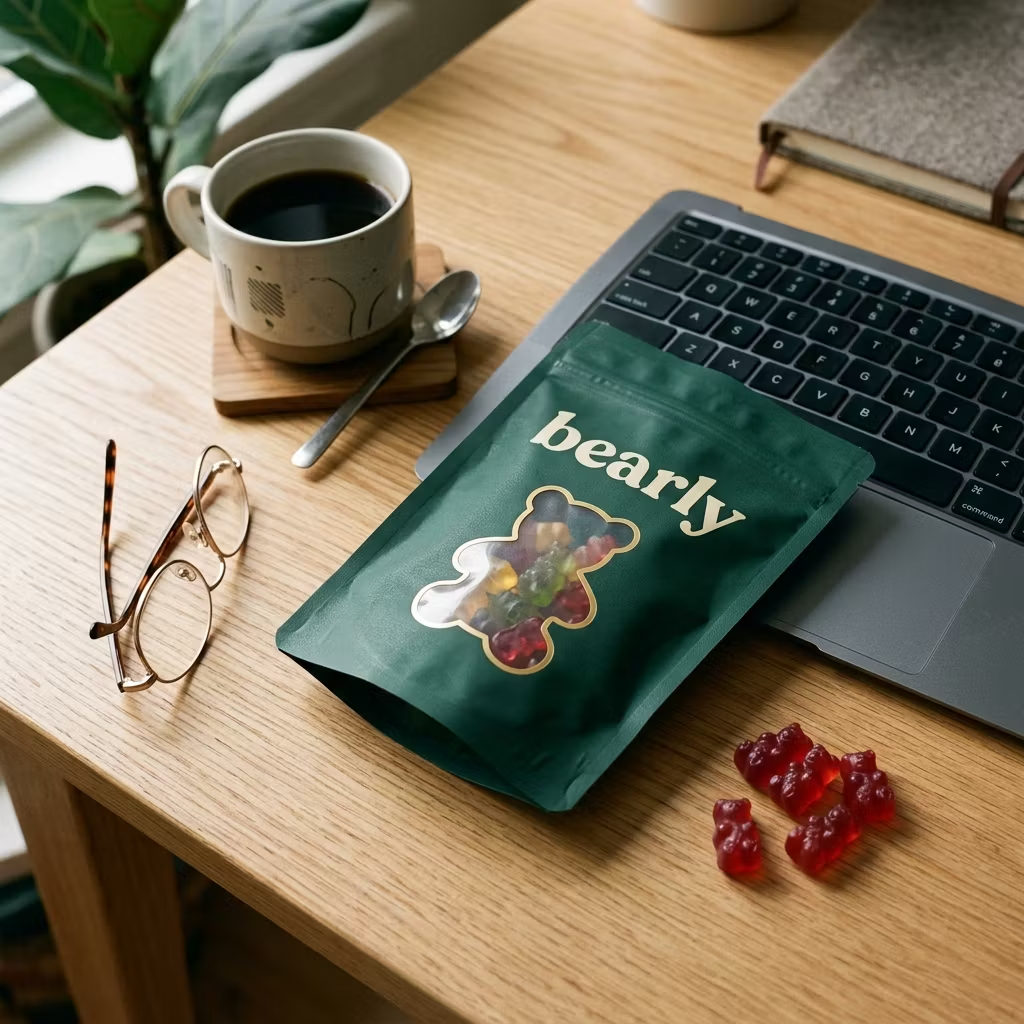
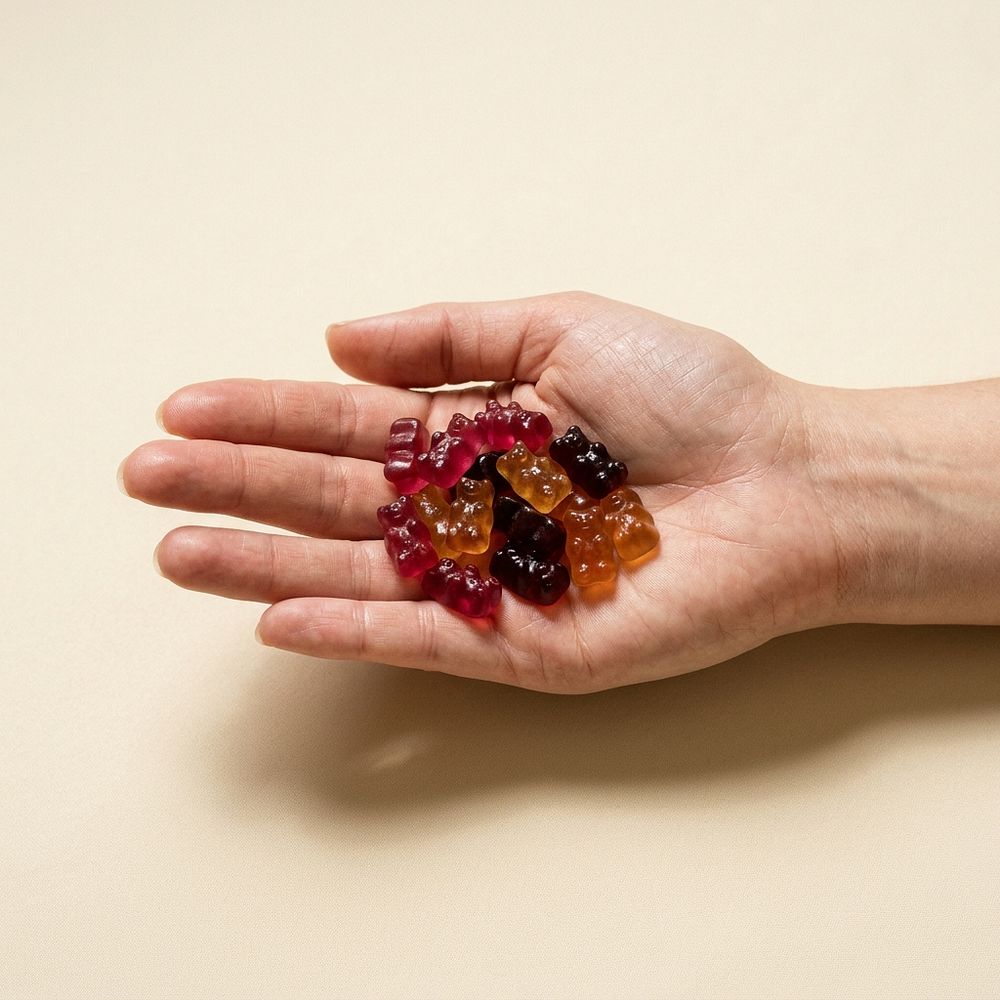
So we stopped asking what people should do and started asking what they actually would. The answer was candy — real gummy candy with everything wrong deleted, and 20 grams of complete protein inside. Not a shake. Not a bar. A third format.
What we believe.
Three rules everything on this page follows.
Show the number.
Every claim ships with a receipt — a label, a panel, a certificate. No adjective stands alone.
Concede first.
Sugar-free gummies earned their reputation. We'd rather say so than pretend otherwise.
Never blame you.
If protein never stuck before, the format failed — not you.
Complete protein. Nine for nine.
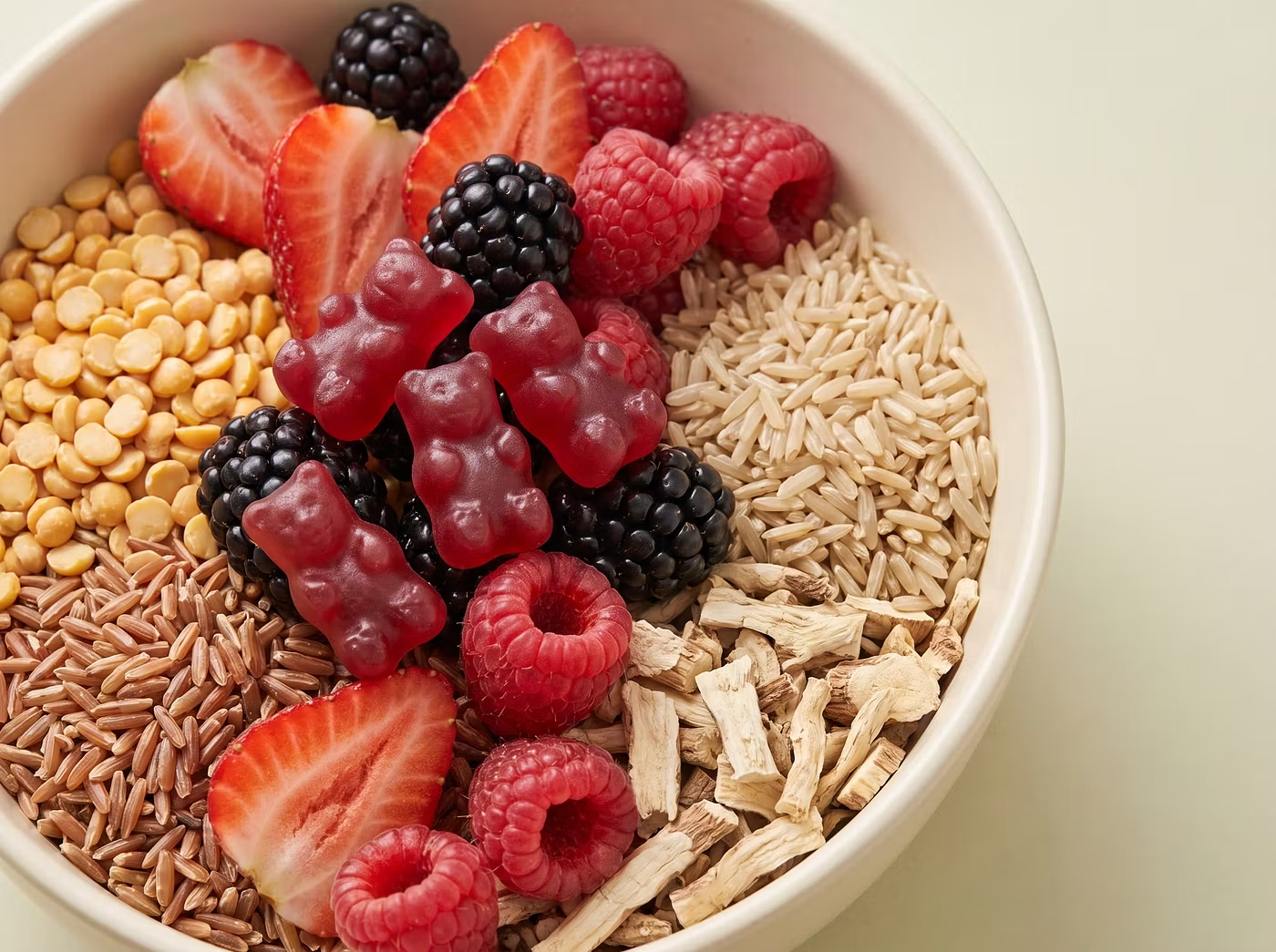
Pea protein is naturally low in methionine. Rice protein is naturally low in lysine. Blended, they cover all nine essential amino acids — that's why it's a blend and not a choice.
Histidine
Isoleucine
Leucine
Lysine
Methionine
Phenylalanine
Threonine
Tryptophan
Valine
The full amino panel in grams per serving is published here as soon as the final lab panel is in.
What makes it sweet
The sweetener, named.
Erythritol, plus natural flavors. Not maltitol, not sorbitol — the two sugar alcohols that earned sugar-free gummies their digestive reputation. Erythritol is largely absorbed in the small intestine and excreted unchanged, which is why it behaves differently.
About the headlines. In 2023, researchers reported an association between high circulating erythritol levels and cardiovascular events in older patients who already had elevated cardiac risk. It was observational — it measured blood levels (which the body also produces on its own) rather than intake, and it wasn't designed to show cause. Regulators continue to permit erythritol. We'd rather you hear it from us than find it in a comment section.
The quiet extra
The quiet 4 grams.
Every pouch carries 4g of fructooligosaccharides (FOS) — a prebiotic fiber your gut bacteria ferment, with a negligible effect on blood sugar.
It's also why the carbohydrate line on the panel reads higher than the sugar line: the difference is fiber, not sweetness.
Third-party tested. Every lot.
The certificate of analysis goes up here — the actual document, not a summary.
Certificate of analysis publishes here with the first production lot.
Questions about the label.
Is erythritol safe?
Erythritol is permitted as a food ingredient in the US and the EU. The 2023 study that made headlines was observational and measured blood levels, not intake — the section above walks through what it did and didn't show. If you'd rather avoid it, that's a reasonable call, and the 90-day guarantee covers it.
Why is the carb line higher than the sugar line?
Fiber. Each pouch carries 4g of fructooligosaccharides, which count as carbohydrate on the panel but aren't sugar and barely touch blood sugar.
Is plant protein as good as whey?
On the basics, blended pea and rice cover all nine essential amino acids. Whey still wins on price per gram — we're not going to pretend otherwise. The trade is format: a handful instead of a shaker.
Where's the full nutrition panel?
On the back of every pouch. The final lab panel, including grams per amino acid, is published on this page as soon as it's in.
Twenty grams. With receipts.
One handful a day. No shaker, no blender, no fridge — and every number on this page behind it.
Try Risk-Free Today
Free shipping90-day money-back guarantee